Physical Therapy in Holly Springs, NC: A Complete Guide to Recovery and Performance
This is a subtitle for your new post
If you are dealing with nagging pain, recovering from an injury, or quietly struggling with symptoms you have never felt comfortable discussing, you are not alone. Many people in Holly Springs and the greater Wake County area spend months — sometimes years — being told their symptoms are normal or that they simply need to live with them. That is not the case, and it is not the standard of care you deserve.
At Evolve Physical Therapy, we believe recovery should be personal, thorough, and led by a provider who has the time to listen. This guide walks through what physical therapy in Holly Springs, NC looks like, when to seek it, and how Evolve approaches orthopedic, sports, and pelvic health care differently than what you may have experienced before.
Understanding When to Seek Physical Therapy
Physical therapy is not just for post-surgical recovery or acute injuries. It is a proactive tool for pain relief, performance, and long-term health at every stage of life.
Common Orthopedic Conditions and Sports Injuries
Many people wait too long to address pain, assuming it will resolve on its own. Orthopedic physical therapy can help with a wide range of musculoskeletal issues, including:
- Low back pain, mid back pain, neck pain, sciatica, and scoliosis-related discomfort
- Knee pain, ACL injuries, meniscus injuries, and runner's knee
- Hip pain, hip impingement (FAI), and groin pain
- Shoulder impingement, rotator cuff pain or tears, and frozen shoulder
- Tennis elbow, golfer's elbow, and carpal tunnel symptoms
- Plantar fasciitis, ankle sprains, and Achilles tendinopathy
- Headaches, TMJ pain, and general arthritis or tendinopathy
Whether you are managing a chronic overuse injury or recovering from surgery, addressing these issues early helps prevent compensation patterns that lead to further problems down the road.
Recognizing Pelvic Health Needs
If you have experienced urinary leakage when you laugh or exercise, pain during intercourse, pelvic pressure, or lingering discomfort after childbirth, you may have been told these symptoms are simply part of life. They are not.
Signs that pelvic floor physical therapy could help include:
- Urinary or fecal incontinence
- Pelvic pain or pressure, including symptoms of prolapse
- Painful intercourse
- Diastasis recti after pregnancy
- Endometriosis-related pelvic pain
At Evolve Physical Therapy, our team takes these symptoms seriously and works with you to identify the true root cause, rather than masking symptoms.
The Evolve Physical Therapy Difference: Personalized Care in Holly Springs
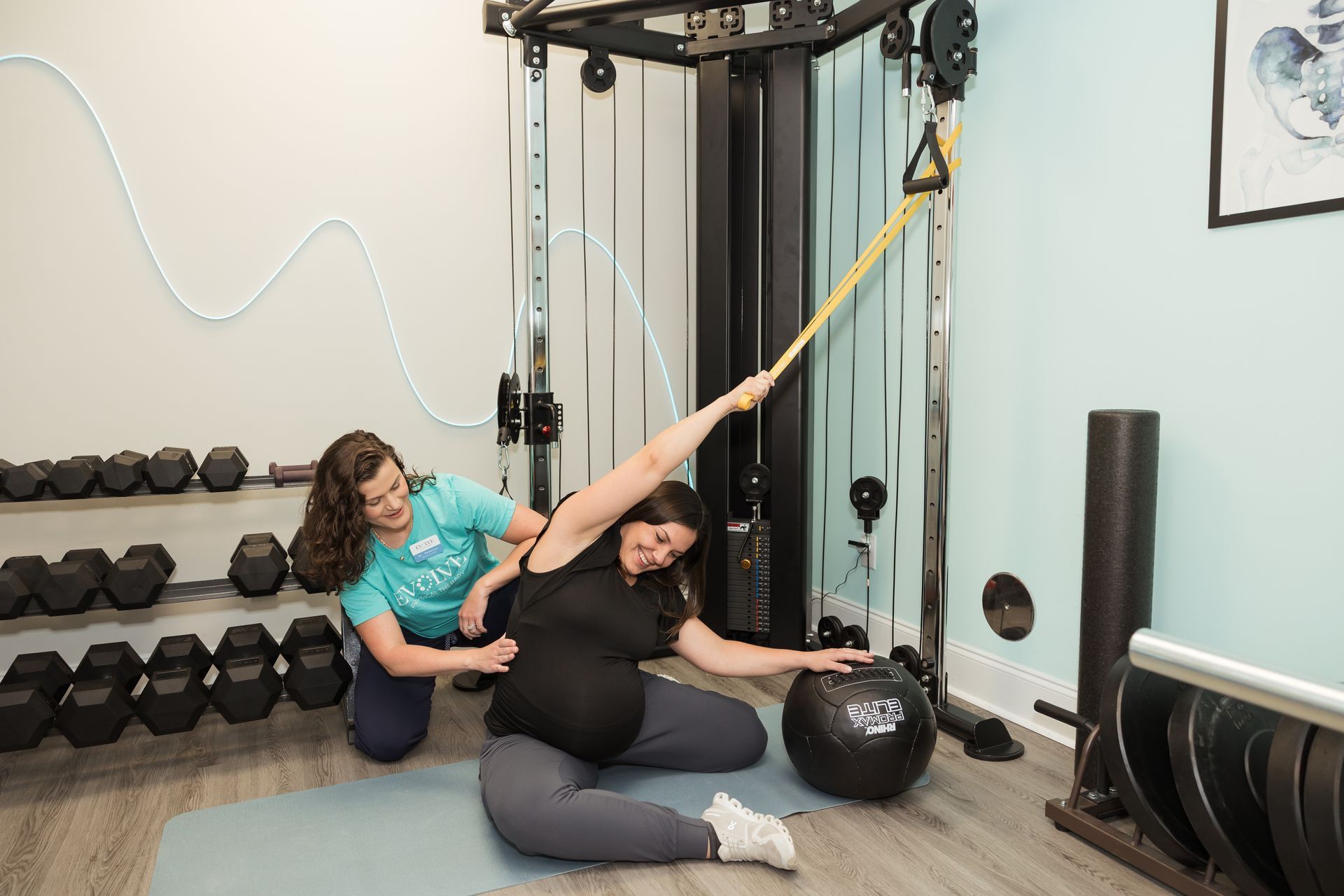
What sets Evolve Physical Therapy apart starts with how sessions are structured. Every visit is one-on-one for a full 60 minutes with a Doctor of Physical Therapy. You are never rushed and never seen alongside another patient during your appointment. Your provider's full attention is on you, your body, and your goals for the entire session.
Our approach looks at the whole body. Instead of focusing narrowly on the area that hurts, we assess how your core, hips, breathing patterns, posture, and overall movement mechanics contribute to your symptoms. Pain in one area is often connected to dysfunction somewhere else, and treating only the symptom rarely leads to lasting results.
Because North Carolina allows direct access to physical therapy, you do not need a physician referral to begin care at Evolve. You can book an evaluation as soon as you are ready. Between sessions, you also have the ability to text your physical therapist directly with questions or concerns, so you are never left wondering what to do next.
A Deep Dive into Pelvic Health Physical Therapy at Evolve
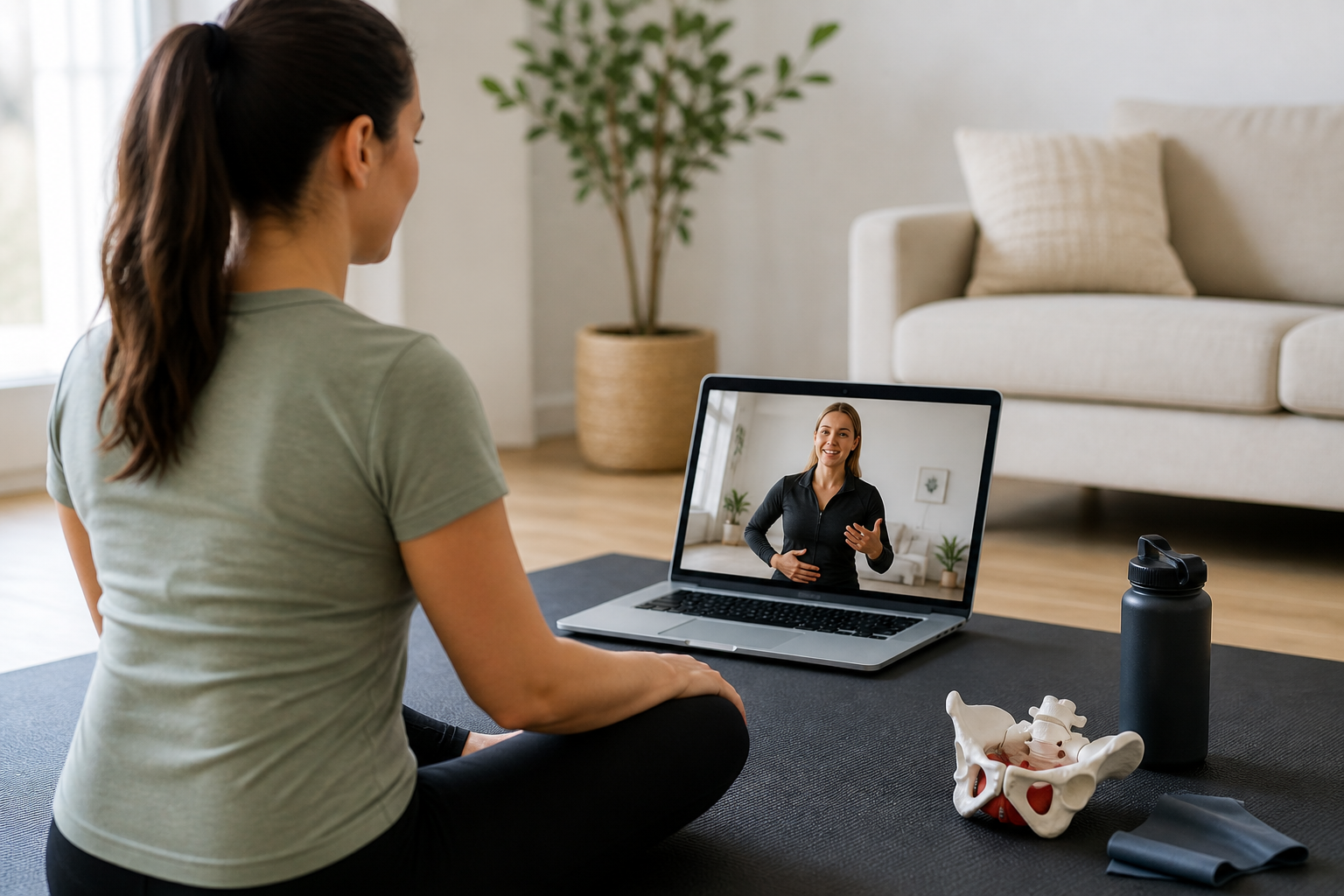
Pelvic health physical therapy is one of the most specialized and often overlooked areas of care. Evolve has built a program specifically for individuals navigating pregnancy, postpartum recovery, and chronic pelvic pain.
Specialized Care for Pregnancy and Postpartum
Pregnancy and the postpartum period bring significant changes to your body, and preparing for them matters. Our prenatal and postpartum physical therapy services help patients:
- Prepare the body for birth and reduce the risk of tearing
- Manage pregnancy-related pain in the back, hips, or pelvis
- Address diastasis recti and core dysfunction after delivery
- Safely return to exercise and daily activities postpartum
Our clinic is welcoming for patients who bring their little ones along, with a comfortable environment designed to help you focus on your care.
Addressing Chronic Pelvic Pain and Dysfunction
For those dealing with painful intercourse, endometriosis-related pelvic pain, prolapse symptoms, or ongoing incontinence, Evolve offers both internal and external treatment techniques. Every treatment option is guided entirely by your comfort level and informed consent. Nothing happens without a clear explanation of what is being done and why, and you always remain in control of your care.
Orthopedic and Performance Physical Therapy for an Active Life
Evolve Physical Therapy is not only a pelvic health clinic. We also provide comprehensive orthopedic and sports performance physical therapy for anyone looking to move, train, or simply live pain free.
Restoring Function and Managing Pain
Our orthopedic physical therapy services address conditions across the entire body, including:
- Lower extremity issues such as ACL recovery, knee pain, IT band syndrome, and shin splints
- Spine conditions including low back pain, neck pain, and sciatica
- Upper extremity concerns such as rotator cuff pain, tennis elbow, and wrist pain
- General pain management, posture improvement, and mobility goals
We also support patients through post-surgery rehabilitation, prehab before a procedure, and return-to-work recovery.
Enhancing Athletic Performance and Recovery
For athletes and active individuals, Evolve offers movement screens, running form assessments, and running gait analysis to identify inefficiencies before they become injuries. Return-to-sport testing helps confirm you are truly ready to get back in the game, while our recovery services support faster turnaround between training sessions.
We also work with younger athletes on youth sports performance and injury prevention strategies, supporting adolescent and teen health through every stage of athletic development.
What to Expect at Evolve Physical Therapy
The Initial Evaluation
Your first visit is a comprehensive, one-on-one evaluation where your Doctor of Physical Therapy takes the time to understand your full history, symptoms, and goals. This is not a rushed intake process.
From there, your provider builds a customized plan of care tailored specifically to your symptoms, lifestyle, and what you want to achieve, whether that is returning to running, resolving pelvic pain, or getting back to daily activities without discomfort.
Ongoing Treatment Sessions
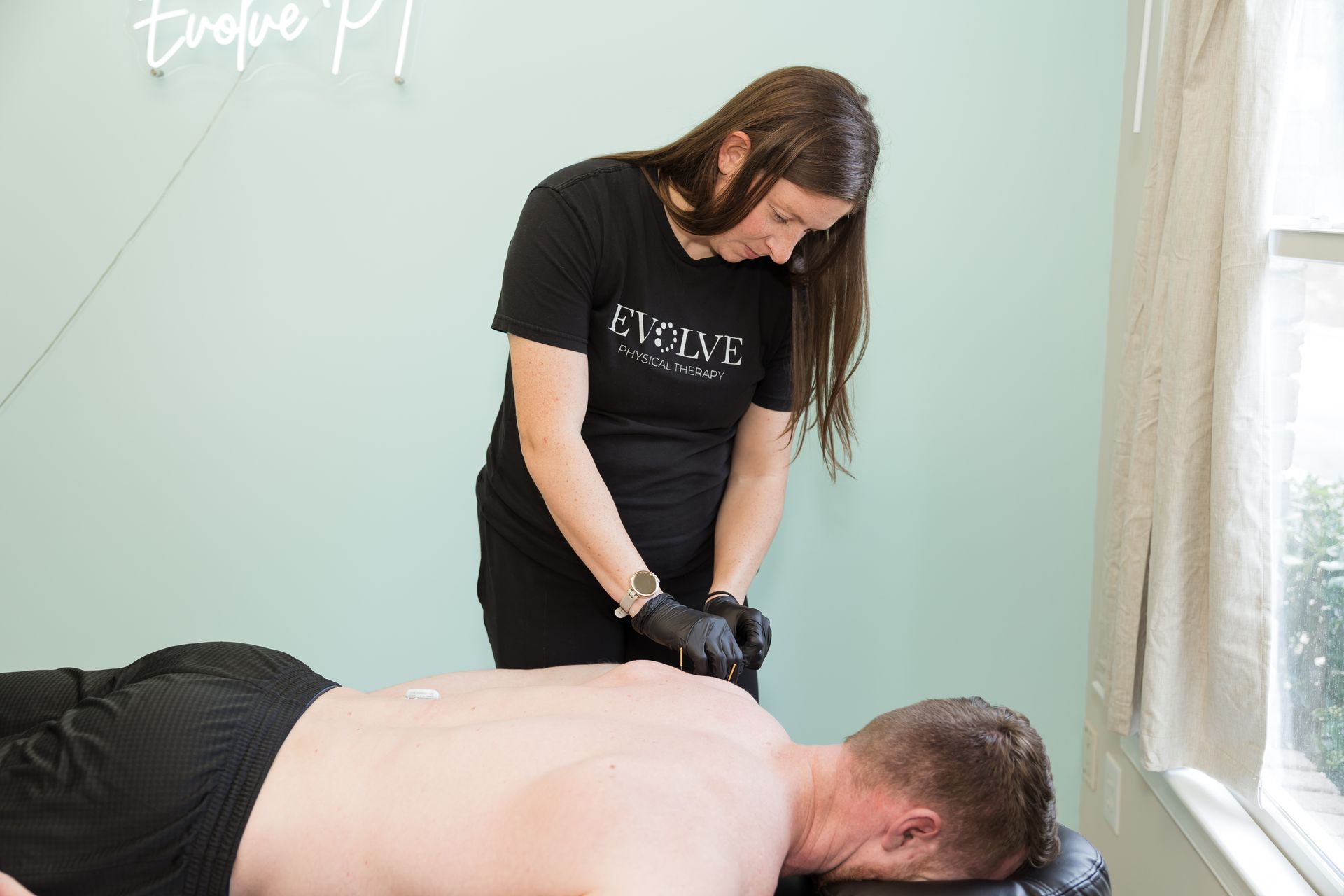
Each follow-up session continues the one-on-one, 60-minute model. Sessions typically combine hands-on manual therapy, dry needling, and movement retraining based on what your body needs that day. Every session also includes education, so you understand exactly what is happening in your body and how the treatment plan is addressing it.
Treatments and Modalities Used at Evolve
Evolve uses a wide range of evidence-informed treatments to support recovery and performance, including:
- Joint mobilization and manipulation
- Manual therapy and soft tissue mobilization
- Trigger point therapy and cupping
- IASTM and scraping techniques
- Dry needling for pain relief and muscle function
- Pelvic floor internal and external techniques
- Neuromuscular re-education and balance or proprioception training
- Therapeutic exercise and resistance training
- Blood flow restriction (BFR) training
- Plyometrics and return-to-sport progressions
- Taping, cold therapy, compression therapy, and heat therapy
Your treatment plan will draw from these tools based on your specific diagnosis, comfort level, and goals, not a one-size-fits-all protocol.
Comprehensive Care Across Life Stages in Wake County
Evolve Physical Therapy supports patients through nearly every life stage and goal, including:
- Prenatal support and postpartum recovery
- Adolescent and teen health, including youth sports performance
- Perimenopause and menopause support
- Healthy aging, balance, and fall prevention
- Pain management, mobility, flexibility, and posture improvement
- Strength building and return to running or sport
- Post-surgery rehab, prehab, and return to work
We proudly serve patients throughout Holly Springs, Apex, Fuquay-Varina, Cary, Raleigh, and the surrounding Wake County community.
Why Holly Springs and Wake County Choose Evolve Physical Therapy
Patients choose Evolve Physical Therapy because they want more than a quick fix. They want a provider who listens, has the specialized training to address complex concerns, and takes the time to find the real root cause of their pain.
As a self-pay clinic, your care is directed by your Doctor of Physical Therapy, not dictated by outside limitations. Combined with our one-on-one, 60-minute sessions, direct access with no referral required, and the ability to text your therapist between visits, Evolve is built around your needs first.
Take the First Step Toward Recovery and Performance in Holly Springs
You do not have to keep living with pain, pelvic dysfunction, or symptoms other providers have dismissed. Evolve Physical Therapy is here to give you the compassionate, specialized, one-on-one care you deserve, whether you are preparing for birth, recovering postpartum, managing an orthopedic injury, or working toward a performance goal.
Schedule your initial evaluation with Evolve Physical Therapy today and take the first step toward lasting recovery and better movement.