
Pelvic Floor
Physical Therapy
Holly Springs, NC
Get Back to Feeling Strong, Confident & Comfortable in Your Body
**No long waitlists, we can see you within a week!**
Leaking when you run, jump, cough, or sneeze?
Feeling pelvic pressure or heaviness?
Dealing with painful sex, pelvic pain, or persistent hip or low back pain?
Trying to recover after having a baby or wondering how to safely return to exercise?
You don't have to just live with it.
At Evolve Physical Therapy, our pelvic floor physical therapists help you understand why you're experiencing symptoms and what we can do about them.
Every appointment is a private, 60-minute, one-on-one session with a Doctor of Physical Therapy focused completely on you.
NEW PATIENT SPECIAL: $99 PELVIC FLOOR EVALUATION
Pelvic Floor Problems Are Common. That Doesn't Mean You Have to Accept Them.
Your pelvic floor does much more than control your bladder.
It works together with your core, hips, diaphragm, back, and the rest of your body to help manage pressure, provide support, and keep you moving confidently.
When something isn't working properly, symptoms can show up in ways you might not expect.
We commonly help patients experiencing:
(click each symptom for more information)
Bladder Symptoms
- Urinary leakage
- Leaking with running, jumping, coughing, or sneezing
- Urinary urgency or frequency
- Difficulty completely emptying the bladder
Pelvic Pain
- Pelvic or vaginal pain
- Pain during or after sex
- Pain with tampon use
- Pain with pelvic exams
- Tailbone pain
- Persistent hip or low back pain
Pelvic Organ Prolapse
- Pelvic pressure or heaviness
- Vaginal bulging
- Feeling like something is "falling out"
- Symptoms that worsen with standing, lifting, or exercise
Pregnancy & Postpartum
- Pregnancy-related pelvic or back pain
- Birth preparation
- Postpartum weakness or pain
- Urinary leakage after childbirth
- Diastasis recti
- C-section recovery
- Round Ligament Pain
- Sciatica during Pregnancy
- Returning to running, lifting, or exercise after having a baby
Core & Movement Issues
- Diastasis recti
- Core weakness
- Difficulty returning to exercise
- Hip or low back pain that hasn't improved with traditional treatment
We Don't Just Treat Your Pelvic Floor. We Look at the Whole You.
Your symptoms aren't happening in isolation.
That's why we don't simply hand everyone a sheet of Kegels.
Your Doctor of Physical Therapy evaluates how your pelvic floor, core, breathing, hips, mobility, strength, and movement patterns work together.
Then we build an individualized treatment plan around your symptoms, your body, and—most importantly—what you want to get back to doing.
Whether that's:
- Running without leaking.
- Picking up your kids without pain.
- Returning to CrossFit or weightlifting.
- Having sex without discomfort.
- Feeling confident during pregnancy.
- Recovering after childbirth.
- Or simply making it through your day without thinking about your pelvic floor.
Your goals become our goals.
What Does Pelvic Floor Physical Therapy Actually Look Like?
Pelvic floor therapy is much more than Kegels.
Depending on your evaluation and goals, treatment may include:
- Pelvic floor muscle training
- Relaxation and coordination training
- Core strengthening
- Progressive strength and weight training
- Breathing and pressure-management strategies
- Manual therapy
- Soft tissue treatment
- Dry needling
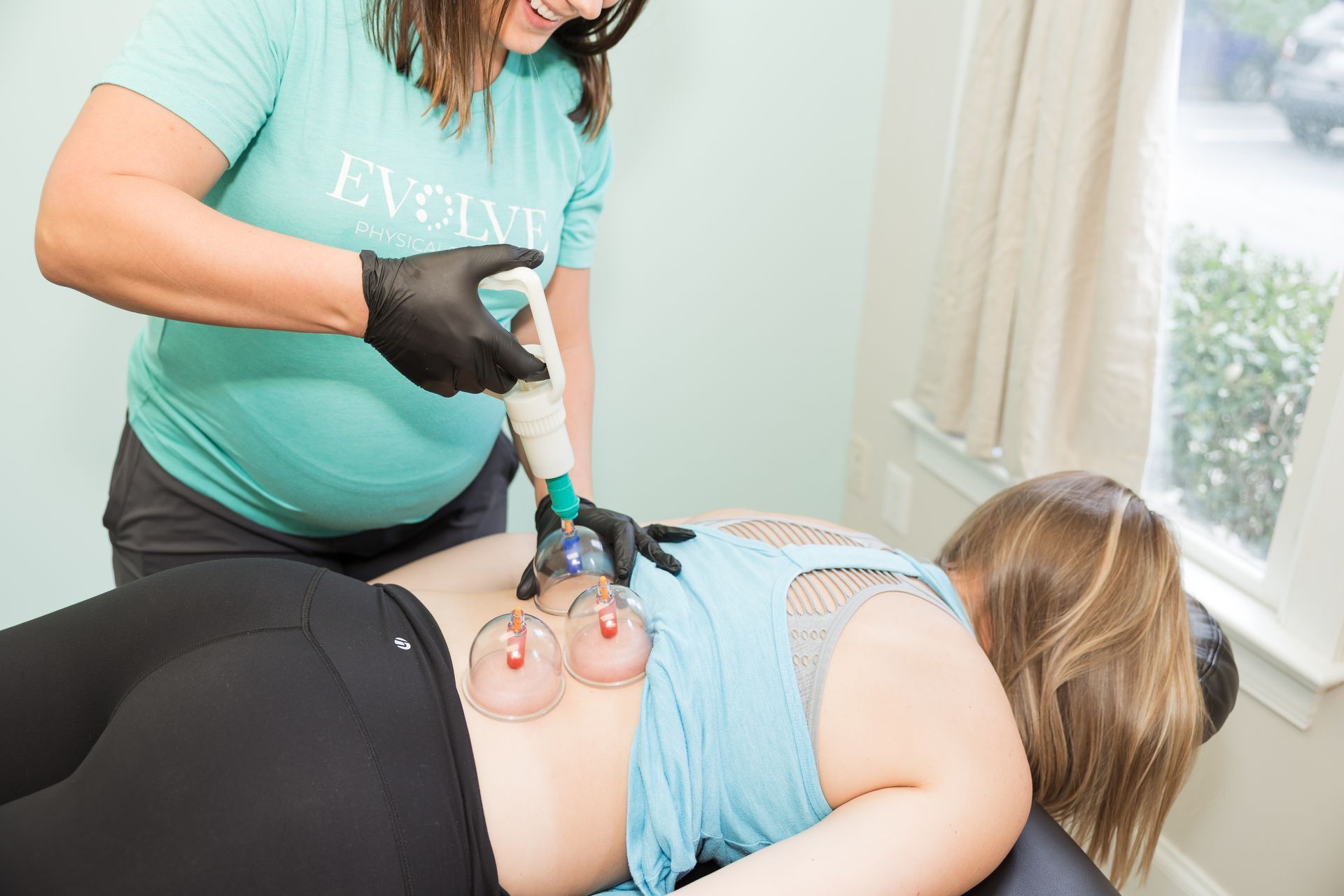
- Cupping
- Hip and spinal mobility
- Functional movement training
- Running or sport-specific progression
- Pregnancy and birth preparation
- Postpartum return-to-exercise programming
Your treatment changes as you progress.
The goal isn't to keep you in physical therapy forever.
It's to give you the strength, confidence, and tools to get back to your life.
What About an Internal Pelvic Floor Exam?
This is one of the most common questions we receive.
An internal examination is never required.
An internal pelvic floor assessment can provide valuable information about pelvic floor strength, tension, coordination, and function, but it is only performed when appropriate and when you are comfortable with it.
Pelvic floor dysfunction can also be evaluated and treated externally.
Your therapist will explain your options, answer your questions, and make sure you're comfortable with your treatment plan.
You are always in control of your care.
Why Choose Evolve for Pelvic Floor Physical Therapy?
60 Minutes. One Patient. One Doctor of Physical Therapy.
We don't double-book appointments.
You aren't bounced between providers or handed off to an aide.
Your entire appointment is dedicated to you.
We Treat More Than Your Symptoms
If you're leaking when you run, we don't just tell you to do Kegels.
We look at your pelvic floor, core, hips, breathing, strength, running mechanics, pressure management, and anything else that may be contributing to the problem.
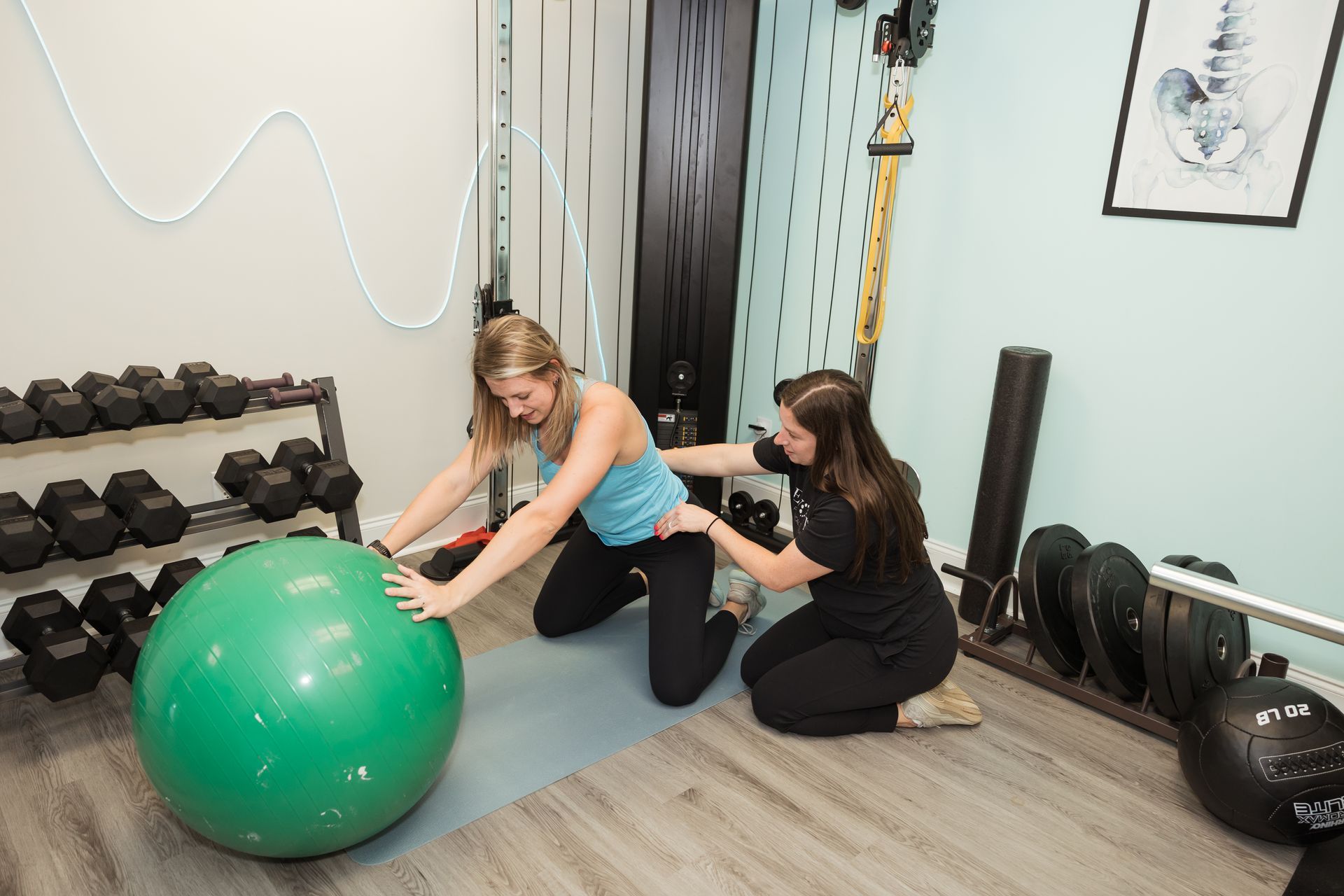
Treatment + Strength Training
Getting out of pain is only part of the process.
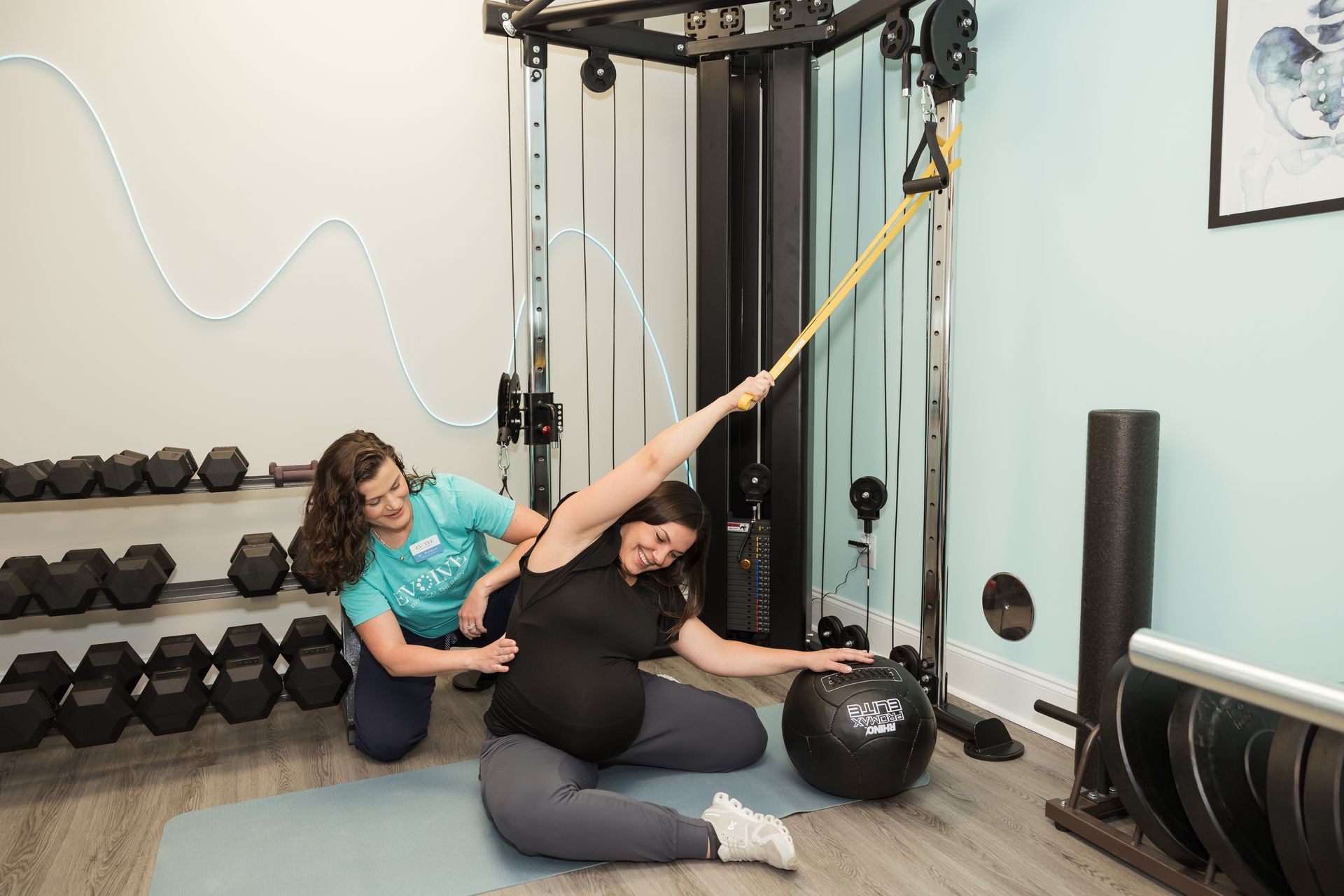
We want your body prepared for the demands of your actual life—whether that's carrying your baby, running a 5K, lifting weights, playing a sport, or getting back into the gym.
Hands-On Treatment Is Included
When appropriate, your therapist can incorporate manual therapy, soft tissue work, dry needling, cupping, mobility work, and other treatment techniques into your session.
There are no separate add-on charges for treatment techniques your therapist believes will benefit you.
Pregnancy & Postpartum Expertise
Pregnancy and postpartum recovery deserve more than "wait six weeks and see how you feel."
We help patients prepare their bodies for birth, manage pregnancy-related symptoms, recover postpartum, rebuild their core and pelvic floor, and safely return to exercise.
Private, Comfortable Environment
Pelvic health can involve conversations you probably don't want to have in the middle of a crowded gym.
Our sessions are private, individualized, and designed to make discussing sensitive concerns as comfortable as possible.
Your First Visit
Step 1 — Find the Cause
Your Doctor of Physical Therapy will listen to what's been happening, discuss your goals, and perform a comprehensive evaluation to determine what may be contributing to your symptoms.
Step 2 — Treat the Problem
We'll begin treatment and build an individualized plan that may incorporate hands-on therapy, pelvic floor treatment, mobility work, strengthening, and movement retraining.
Step 3 — Build Your Toolbox
We'll progressively build the strength, mobility, and strategies you need to return to the things you love—and give you the tools to help keep the problem from coming back.
Pelvic Floor Physical Therapy Near You
Evolve Physical Therapy is located in Holly Springs, North Carolina, and regularly works with patients from:
Holly Springs • Apex • Fuquay-Varina • Cary • Angier and surrounding communities
Our clinic is located at:
1140 Holly Springs Rd, Suite 111
Holly Springs, NC 27540
Pelvic Floor Physical Therapy FAQs
Do I need a referral?
In many situations, you can begin physical therapy without first obtaining a physician referral. Our team can help answer questions about getting started.
Do I have to have an internal pelvic floor examination?
No. Internal examinations are never required. Your therapist will discuss the potential benefits and alternatives with you, and any examination or treatment is based on your comfort and consent.
Is pelvic floor therapy just Kegels?
Definitely not. Some patients actually have pelvic floor muscles that are too tense or have difficulty relaxing, meaning repeatedly performing Kegels may not address the underlying problem. Treatment is based on what we find during your individual evaluation.
Can pelvic floor physical therapy help with urinary leakage?
Pelvic floor physical therapy can address factors that contribute to urinary leakage, including pelvic floor strength and coordination, pressure management, breathing, core function, and movement patterns.
Can pelvic floor physical therapy help with prolapse?
Physical therapy can help people manage symptoms associated with pelvic organ prolapse through individualized pelvic floor training, strength, pressure-management strategies, movement modification, and education.
When should I see a pelvic floor PT postpartum?
You don't have to wait until you're struggling to ask for help. Pelvic floor physical therapy can support postpartum recovery and help you progressively return to everyday activity and exercise. Your therapist can modify treatment based on how recently you delivered and your individual recovery.
Do you accept insurance?
Evolve Physical Therapy is an out-of-network physical therapy practice.
We do not bill insurance directly, but we can provide a superbill that you can submit to your insurance company for possible out-of-network reimbursement depending on your individual benefits.
We accept major credit cards, checks, and HSA/FSA funds.
How long are appointments?
Every pelvic floor physical therapy appointment is 60 minutes, one-on-one with your Doctor of Physical Therapy.
No double booking. No bouncing between multiple patients.
Just individualized care focused on you.
[ BOOK YOUR $99 FIRST APPOINTMENT ]
Ready to Feel Like Yourself Again?
You don't need to wait until your symptoms become severe.
And you don't need to accept leaking, pelvic pain, painful sex, pressure, or weakness as your "new normal."
Let's figure out what's going on and create a plan to help you move forward.
New Patient Pelvic Floor Evaluation
Normally $199
CURRENTLY $99 - New Patient Promo
Full List of Everything We Treat:

Pelvic Floor Physical Therapy Q&A with Dr. Molly
Secure Your Pelvic Floor Appointment in Holly Springs
Ready to improve your pelvic floor?
Read Our Pelvic Floor Physical Therapy Blogs
What is Pelvic Floor Physical Therapy - Blog
Pelvic Floor Dysfunction and Painful Sex - Blog
Is Exercising During Pregnancy Safe? - Blog
A Positive VBAC Experience - Blog
Diastasis Recti Abdominis And Returning to Exercise - Blog
Diastasis Recti and Misinformation - Blog
Birth Prep in the 3rd Trimester - What Does It Look Like? - Blog
Best Position to Push In For Labor - From a Pelvic Floor Physical Therapist - Blog
Why Resistance Training is Important During Pregnancy - Blog
