Why Resistance Training is Important During Pregnancy

Dr. Nicole Perna, PT, DPT • January 28, 2026

Pregnancy Physical Therapy, Holly Springs, NC

If able, exercise during pregnancy should be considered necessary as part of your pregnancy

journey. While walking and aerobic exercise are commonly recommended, strength work with

weights or resistance bands may offer unique benefits. Previous research was limited and

inconsistent on this however a recent article titled “Resistance training in pregnancy:

systematic review and meta-analysis of pregnancy, delivery, fetal and pelvic floor

outcomes and call to action” breaks down new information.

Researchers pulled together all the best available studies on the topic to answer a big question:

Does resistance training during pregnancy influence outcomes for the pregnant person,


the baby, labor and delivery, or pelvic floor health?

They included: 47,619 pregnant participants from 14 countries and 50 studies.

They found that resistance training can:

- Lower Risk of High-Risk Pregnancy Conditions compared to usual care or no resistance

training

- Gestational Hypertension

- Gestational Diabetes

- Perinatal Mood Disorders

- Provide Fetal Benefits

- Fewer causes of macrosomina (when a baby grows very large before birth)

They reported resistance training provided no clear benefits or harms in regard to:

- C-section rates

- Perineal tearing

- Instrumental delivery (forceps/vacuum)

- Length of labor

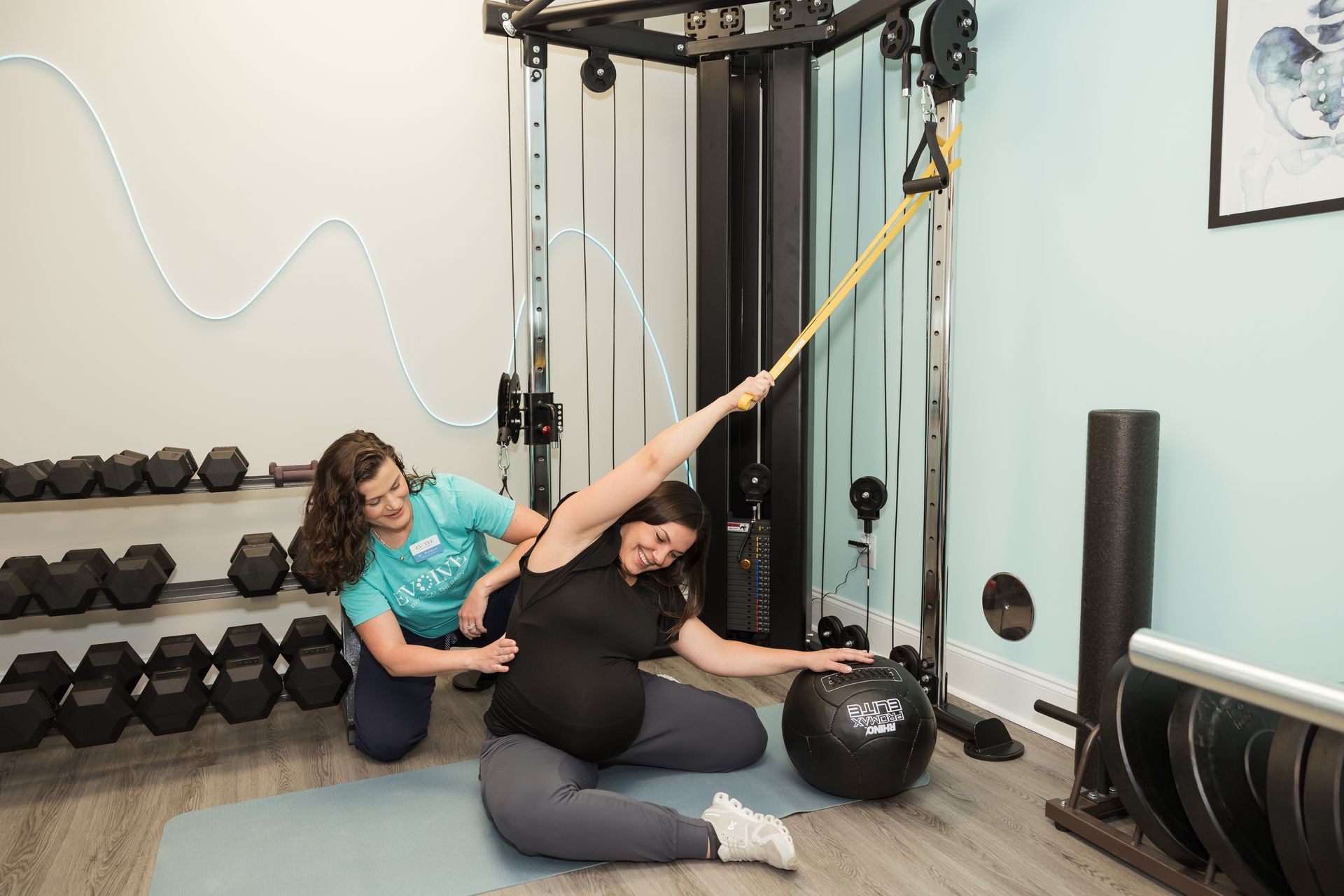
Resistance training during pregnancy appears safe and beneficial for preventing gestational

hypertension, gestational diabetes, mood disorders, and large birth weight when compared to

standard care. It does not seem to increase risks of negative outcomes like cesarean section or

pelvic floor problems.

Real benefits likely depend on how resistance training is done including exercise selection,

intensity, and progression. It is important to have thoughtfully prescribed and supervised

activities that are tailored to your medical history. You should always discuss exercise with your

healthcare provider or Pelvic Floor Physical Therapist prior to starting.

Dr. Nicole Perna, PT, DPT

Evolve Physical Therapy
By Dr. Molly Pierson, PT, DPT February 2, 2026
Physical Therapy For CrossFit Injuries, Holly Springs, NC
By Dr. Rebecca Acevedo, PT, DPT January 9, 2026
Physical Therapy for Low Back Pain in Holly Springs, NC
By Dr. Nicole Perna, PT, DPT January 5, 2026
Birth Prep & Pelvic Floor Physical Therapy in Holly Springs, NC
By Dr. Molly Pierson, PT, DPT December 8, 2025
Holly Springs Physical Therapy For Low Back Pain
By Dr. Rebecca Acevedo, PT, DPT September 26, 2025
Physical Therapy for Plantar Fasciitis in Holly Springs, NC
By Dr. Molly Pierson, PT, DPT September 22, 2025
Holly Springs Physical Therapy For Orthopedic Injuries
By Dr. Rebecca, PT, DPT September 10, 2025
Birth Preparation Holly Springs, NC
By Dr. Molly Pierson, PT, DPT September 3, 2025
Typically, once people get into their 3rd trimester of pregnancy, they focus on winding down, resting, and focusing more on stretching. While stretching is helpful, there is more you can do in your 3rd trimester to better prepare for labor, delivery, and recovery after childbirth. Birth prep physical therapy during the third trimester (weeks 28–40) focuses on helping the body prepare for labor and delivery, relieve discomfort, and support postpartum recovery. Here's what it typically includes: Optimize Pelvic Alignment & Mobility Encourages smoother fetal positioning and reduces chances restrictions from your pelvis and surrounding structures. This can include incorporating different positions to help open up different areas of the pelvis, which allow for a smooth transition as the baby moves through the pelvis. Reduce Pain & Discomfort Targets low back pain, pelvic girdle pain, sciatica, and round ligament pain as the baby continues to grow. Diaphragmatic breathing to help manage labor pain and regulate intra-abdominal pressure Prepare Muscles & Tissues for Labor Pelvic floor coordination and perineal mobility can ease labor and reduce tearing risk. Learning to engage abdominal muscles to assist with pushing. Gentle core exercises for transverse abdominis support. Empowerment Through Education Helps you understand pushing mechanics, breathing techniques, and labor positions. This can include: Pelvic Floor Work Focus is on coordination between diaphragm, pelvic floor muscles, and abdominal Learning how to relax the pelvic floor (just as important as contracting it). Gentle perineal massage techniques (usually after 34 weeks). Postural Adjustments & Alignment Body mechanics for daily life (getting out of bed, lifting other children, etc.). Pelvic tilts, cat-cow, and modified squats to maintain mobility. Laboring positions and strategies for fetal positioning Practice labor positions using birth balls, stools, or partner-assisted techniques. Learn strategies for optimal fetal positioning (like Spinning Babies techniques). Manual Therapy Myofascial release, sacral mobilization, and soft tissue work to relieve tension. Addressing hip or SI joint pain. Ultimately, birth prep is tailored to the needs of the mother and her goals when it comes to her birthing experience. The items listed above are just a snapshot of techniques that can be incorporated into sessions to help one become more educated and aware of what the birth experience may encompass, as well as address aches and pains along the way.
By Dr. Rebecca Acevedo, PT, DPT August 14, 2025
Patient Knee Pain Success Story - Physical Therapy Holly Springs, NC
By Dr. Molly Pierson, PT, DPT August 14, 2025
Evolve Physical Therapy in Holly Springs, NC