Let's take a Walk: Why does daily step count matter?
Tracking daily step counts can significantly enhance physical fitness and overall well-being.

It’s a new year and that means new goals!
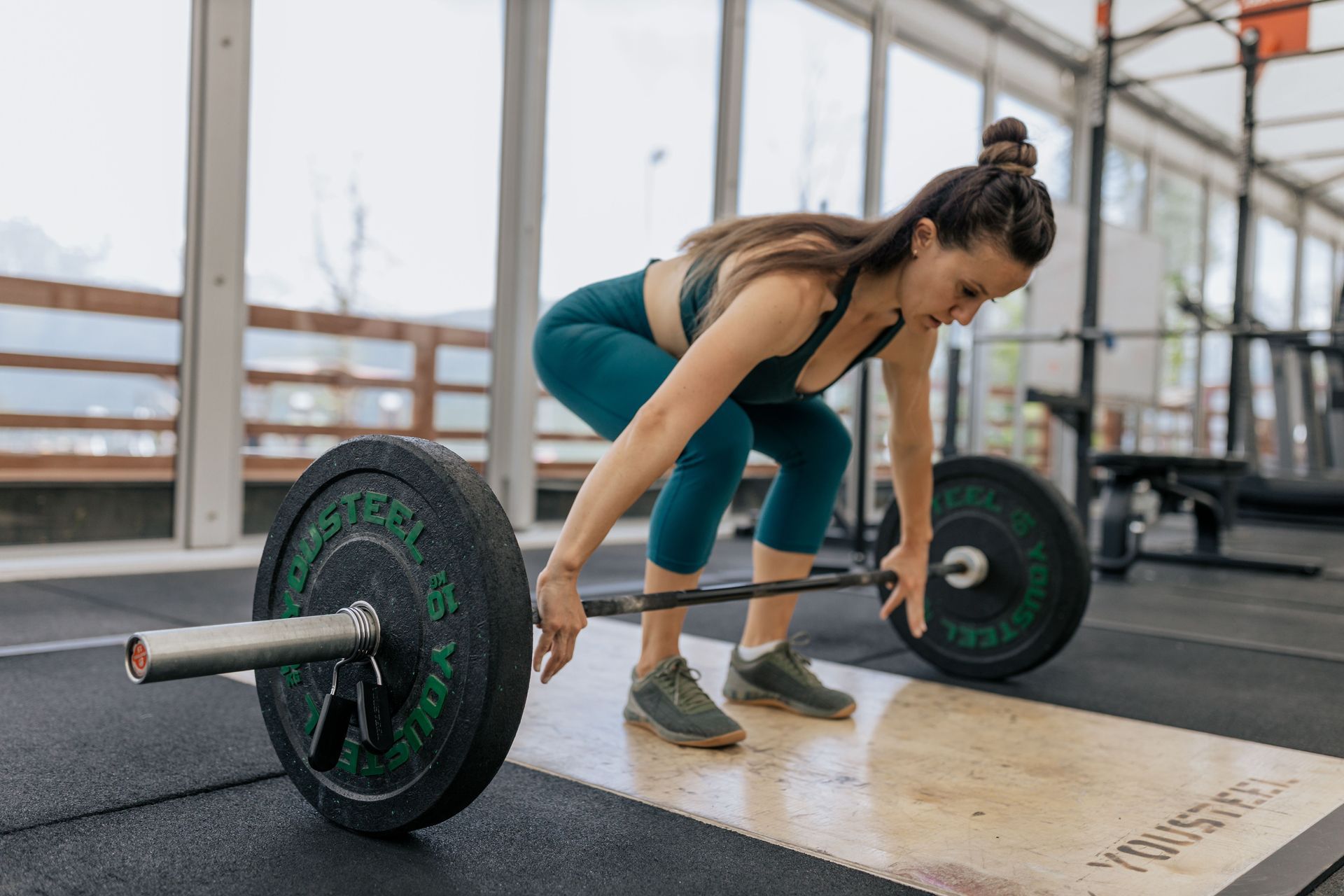
Often during this time we see a lot of individuals rev-up their exercise, and see more gym goers, runners, and people wanting to get in shape. This one hour of increased activity is much needed, and has a lot of benefits like increasing bone density, improving muscle mass, and improving overall life-longevity, however, we often forget about what we are doing the rest of the day and how that matters for our health as well.
While structured exercise and training has immense benefits, unstructured physical activity, such as daily walks, playing with your kids and dogs, or even going for a bike ride, is equally as important for long-term health. Because structured exercise/physical activity is so highly praised, this can result in gaps of knowledge of the benefits of unstructured physical activity and can actually be a contributing factor to health problems such as heart disease, various cancers, and obesity (Bonilla et al., 2023).
In a recent article by Bonilla et al., they described physical inactivity as a problem of insufficient activity to meet the recommendation of health benefits (i.e. 150-300 minutes of moderate intensity activity or 75-150 minutes of vigorous intensity activity per week). If we look at our day and factor in how long we are exercising, that is only 1-2 hours/24 hours. While this is beneficial, it is important to consider what we are doing for the rest of the day, especially when assessing our aches, pains, and overall wellness. If we find ourselves working at our desk or sitting more often than not, this can result in a decline in overall physical fitness, but also increases the risk for cardiovascular comorbidities, diabetes, obesity, and mortality
(Bonilla, et al. 2023).
The increased time at our desk, sitting on the couch, or time driving factors into our sedentary behavior, which is essentially any waking behavior that expends very little energy or less than 1.5 MET. For reference, MET stands for metabolic equivalent task and is a way to rank the intensity of an exercise. So for example, sitting requires very little energy expenditure and is ranked at 1.5 MET, walking is ranked anywhere between 1.5-3.0 MET, and running is 6.0 MET or more (Harvard, 2023). Bonilla et al. goes on to compare activity levels and found that individuals with lower sedentary behavior (< 4 hours/day) and high levels of physical activity (35.5 hours/week) showed lower mortality rates and risk for comorbid conditions than those who were sedentary for > 8 hours/day and had lower physical activity levels. So ultimately individuals who spent more time expending more energy over that 1.5 MET were able to reduce their risk of comorbid conditions and mortality vs those who spent more time sitting. So, does this mean you need to start walking or biking to work and walking all day while you are working?
Not necessarily, however, what it does show is that adding some additional exercises throughout the day can help reduce your risk of all cause mortality, cardiovascular disorders, metabolic dysfunction, obesity, and can be beneficial when coping with injuries or aches and pains. Trying to rapidly increase activity levels and add in longer bouts of movement has been found to be less sustainable. Silva et al. found that adding in small bursts of activity (< 40 minutes) compared to longer durations (180 minutes) was more sustainable in helping individuals adapt these behaviors (2018). While 40 minutes a can seem like a large chunk of your day, adding in shorter durations of activity (walking, biking, or playing with your dog for 10 minutes) multiple times a day, can be a great way to increase your overall activity and reap the benefits as well.
Lastly, a great way to gauge or rank your activity level is by step count. In an article by Kraus et al., they went on to categorize step count into different activity levels which can be a great scale to use as a target to increase overall daily movement (2019). For reference, they found that accumulating 7.5K steps/day was categorized as moderate activity, 10K was categorized as active, and 12.5K was highly active. Increasing this aspect of physical activity can really help to improve your health and wellness for the long run and reduce your feelings of tightness/stiffness from being in one position for too long.
References
Bonilla, D. A., Peralta-Alzate, J. O., Bonilla-Henao, J. A., Cannataro, R., Cardozo, L. A., Vargas-Molina, S., Stout, J. R., Kreider, R. B., & Petro, J. L. (2023). Insights into Non-Exercise Physical Activity on Control of Body Mass: A Review with Practical Recommendations.
Journal of functional morphology and kinesiology,
8(2), 44. https://doi.org/10.3390/jfmk8020044
Harvard, School of Public Health. (2023, October 27).
The nutrition source: Staying active.https://www.hsph.harvard.edu/nutritionsource/staying-active/#:~:text=METs,may%20use%208%2D9%20METs.
Kraus, W. E., Janz, K. F., Powell, K. E., Campbell, W. W., Jakicic, J. M., Troiano, R. P., Sprow, K., Torres, A., Piercy, K. L., & 2018 PHYSICAL ACTIVITY GUIDELINES ADVISORY COMMITTEE* (2019). Daily Step Counts for Measuring Physical Activity Exposure and Its Relation to Health.
Medicine and science in sports and exercise,
51(6), 1206–1212. https://doi.org/10.1249/MSS.0000000000001932
Silva, A., Júdice, P., Carraça, E., King, N., Teixeira, P., & Sardinha, L. (2018). What is the effect of diet and/or exercise interventions on behavioural compensation in non-exercise physical activity and related energy expenditure of free-living adults? A systematic review.
British Journal of Nutrition,
119(12), 1327-1345. doi:10.1017/S000711451800096X